Reflections on “After Love” at OVADA
The project's exhibition After Love: Broken Hearts and Broken Bodies launched at the Oxford Visual Arts Development Agency (OVADA) on Wednesday 7th October. Curated by Audrey Baldwin, it brought together more than 100 individual works by 60 different artists. One of the most exciting aspects of the exhibition has been seeing heartbreak made material through such a variety of forms, including painting, print, sculpture, collage, textile, poetry, music, and performance.
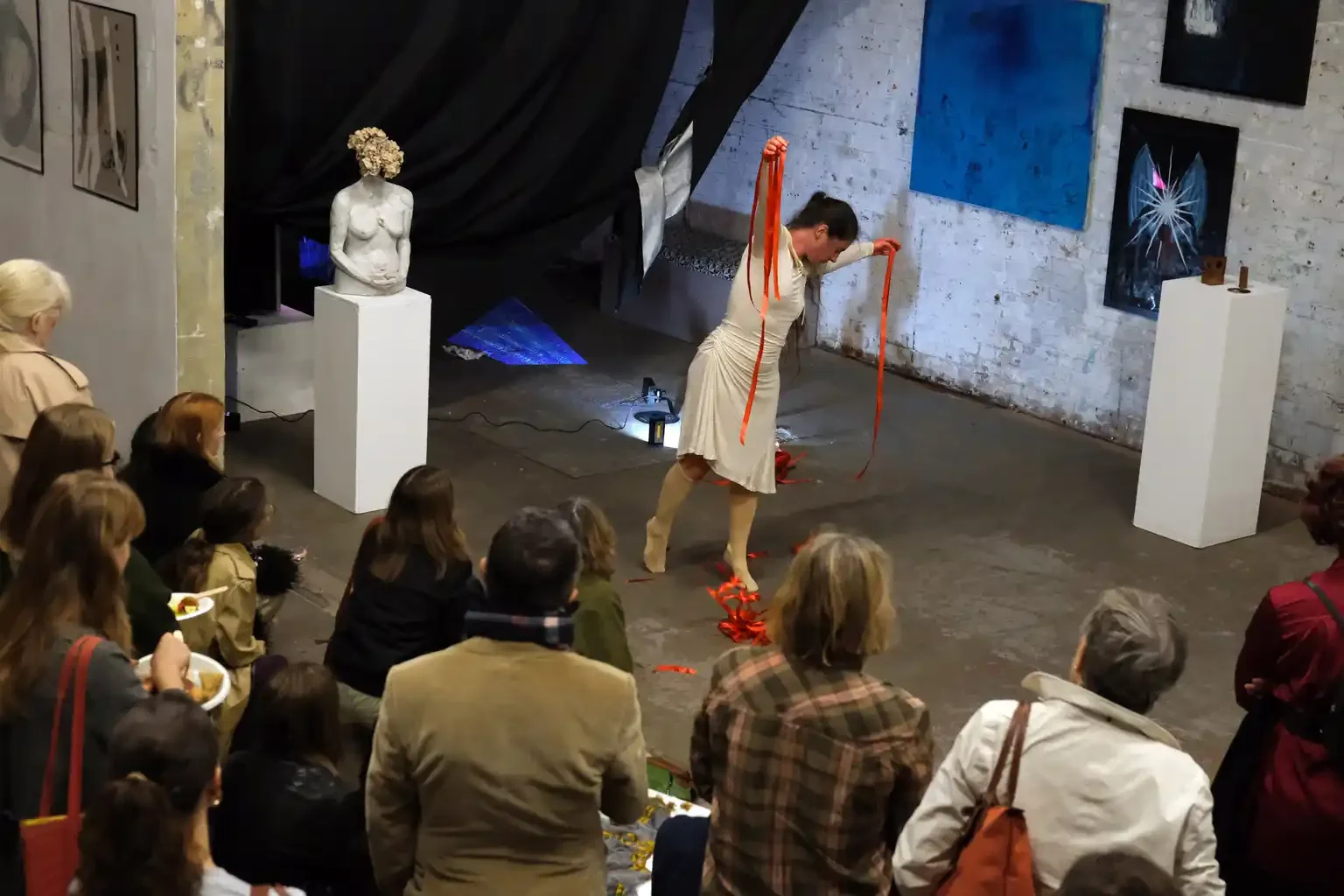
Naomi Morris’ powerful physical meditation on literally cutting loose the ties the bind us. Photography by Dana Houshiar: https://danahoushiar.com
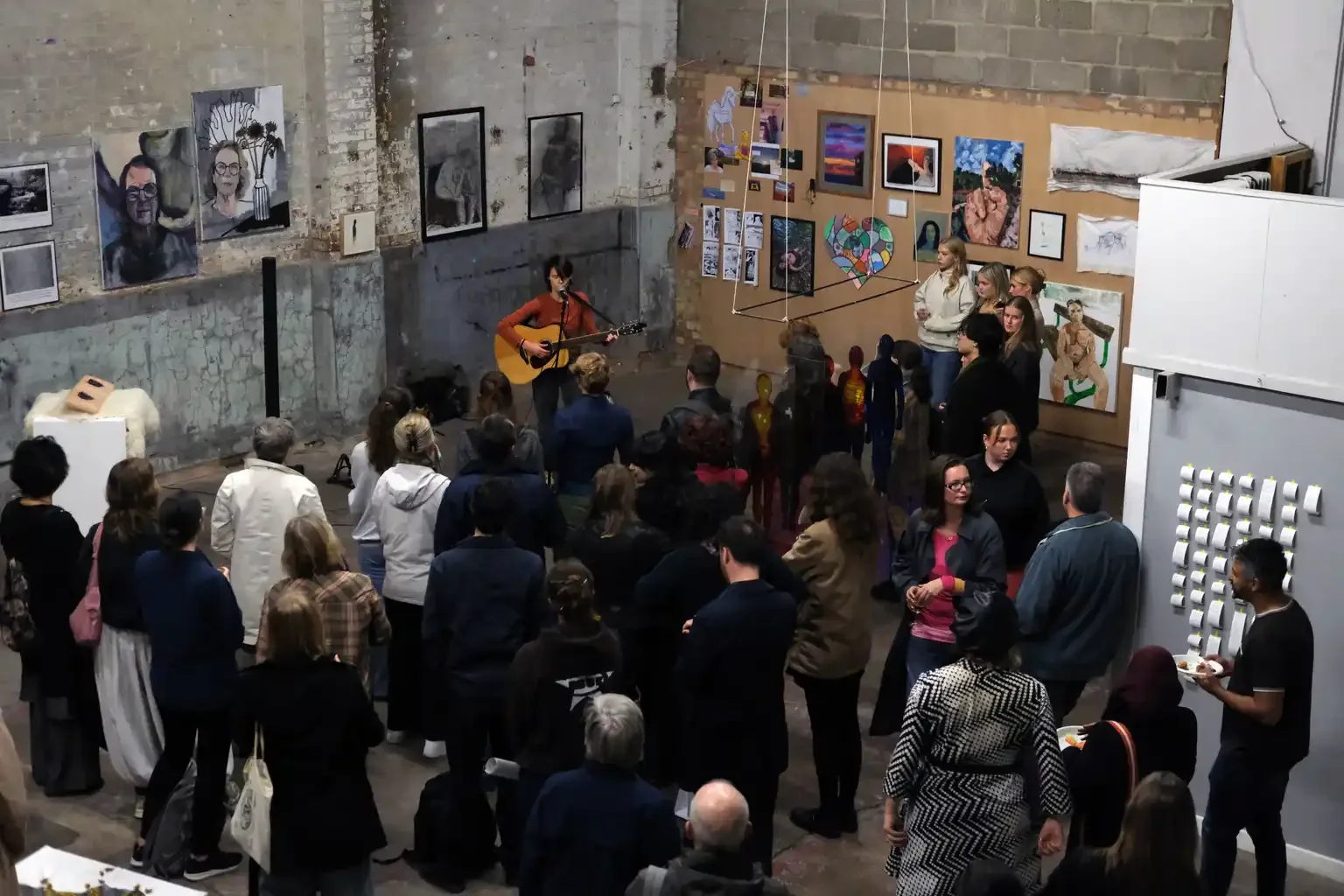
Madeline Linnell’s live performance of her songs Darling and When I Met You from the exhibition. Photography by Dana Houshiar.
For me, the exhibition reinforced the multiplicity of feelings involved in experiences of heartbreak, whether sadness and pain or shock, anxiety, frustration, loneliness, emptiness, dislocation, and a hope for something new. What can feel fundamentally dehumanising and destabilising for some can be a pathway to rebirth and reconnection for others in a different moment in time.
Whilst sitting amongst these works during my shifts as an invigilator I have had the time and opportunity to reflect at greater length upon some of the common themes across each piece, which bring heartbreak so powerfully to life in glass, clay, thread, ink, pencil, and paint. With more than a hundred works on show, this reflection is by no means comprehensive, but focuses on the pieces which made me think in different ways as I sat with them around me.
1. Mundanity
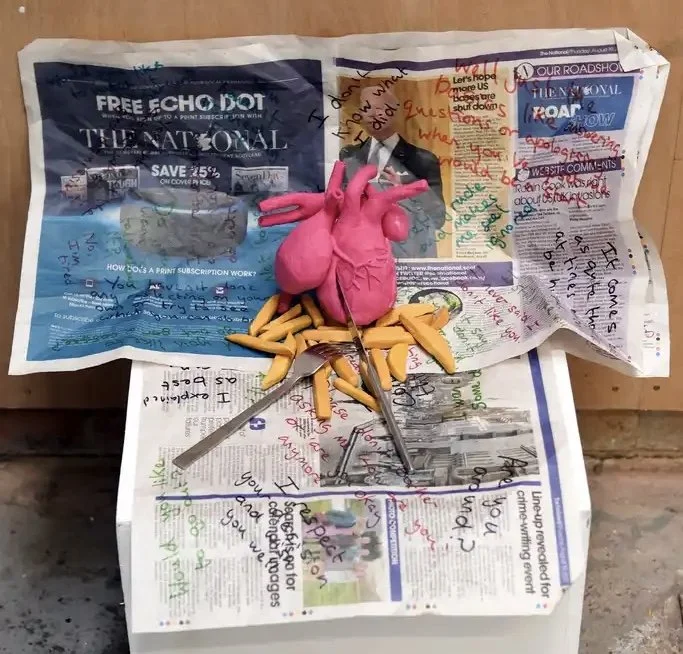
Amy Letts
Heartbreak and Chips
Foam clay sculpture and newspaper
Photography by Dana Houshiar.
The everydayness of heartbreak is evident in works such as Heartbreak and Chips by Amy Letts, in which a foam clay heart is nestled amongst newspaper wrapping with assorted chips, following a break-up that took place in a chip shop. It is at once mundane and unsettling to see a knife and fork slicing into an anatomical heart at mealtime, ready to be consumed.
The destabilising nature of heartbreak and its disruption to the spaces and routines of everyday life is further reflected in Julie Light's pair of fleshly glass pillows inset with copper nails, which evoke a lack of sleep, the impossibility of rest, and disturbance wrought upon our mental peace. The contrast with cosy domesticity is further heightened by the soft sheepskin rug they sit upon. The piece brought to mind a letter from Charles Lamb about an old schoolfriend, complaining how “He is in Love! and tosses and tumbles about in his bed, like a man in a barrel of spikes.”[1]
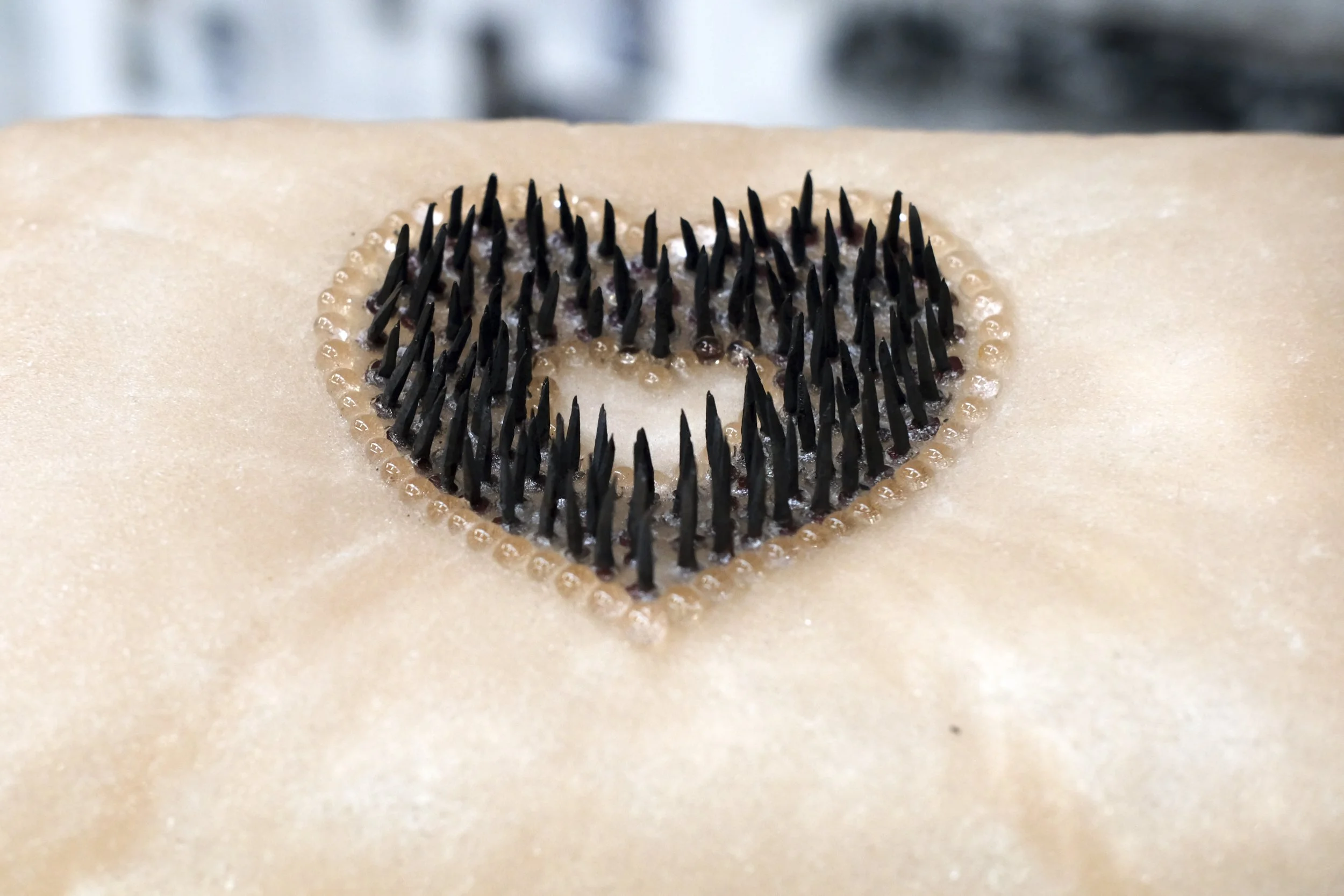
Detail from Julie Light
So Many Sleepless Nights - Lost Love
Glass (pate de verre) and copper nails
Photography by Dana Houshiar.
2. Motion
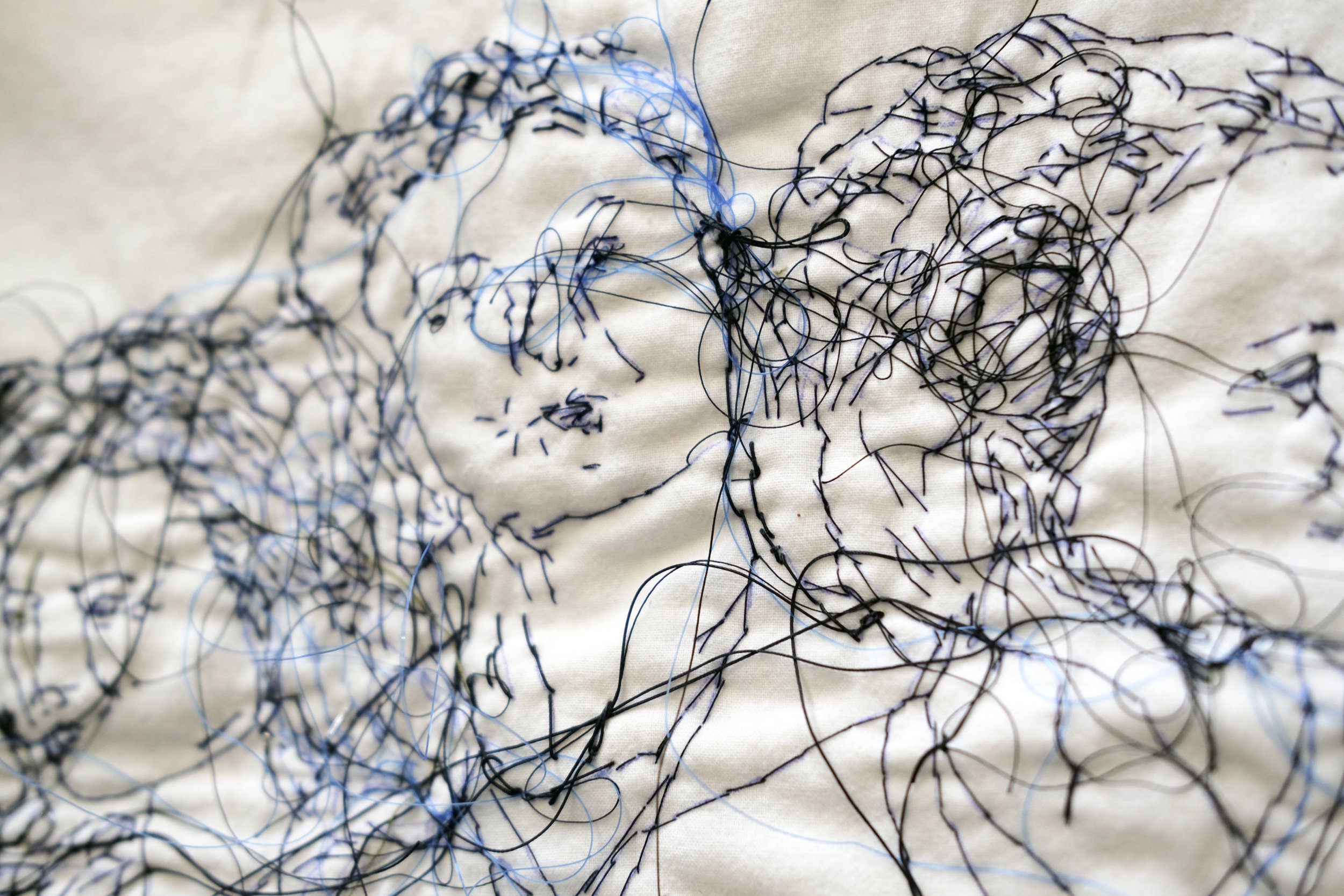
Detail from Jessica Ormerod, Untitled, cotton, suture thread, and suture needles. Photography by Dana Houshiar.
“I am always in motion”, declares one figure in Isobel Walker’s collaged piece, arranged in situ in response to the space. Nearby, Chima Ugwuanyi's Anatomy of Leaving depicts a figure “mid-unravelling”, next to Jessica Ormerod's textile work in suture thread and needles, in which a female head looks furtively around in every direction. So many of the works reflect creatively upon themes of movement and coming apart, including Laura Azevedo’s pair of textile hangings, in which copper wires progressively come further undone (Growth) and are brought back together (Repair). For some, this process of unmooring can leave us feeling almost ghostly or iridescent, as in Sanjana Reddy's haunting portrait My Year of Translucence, in which the central figure is almost reduced to her black eyes and hair.
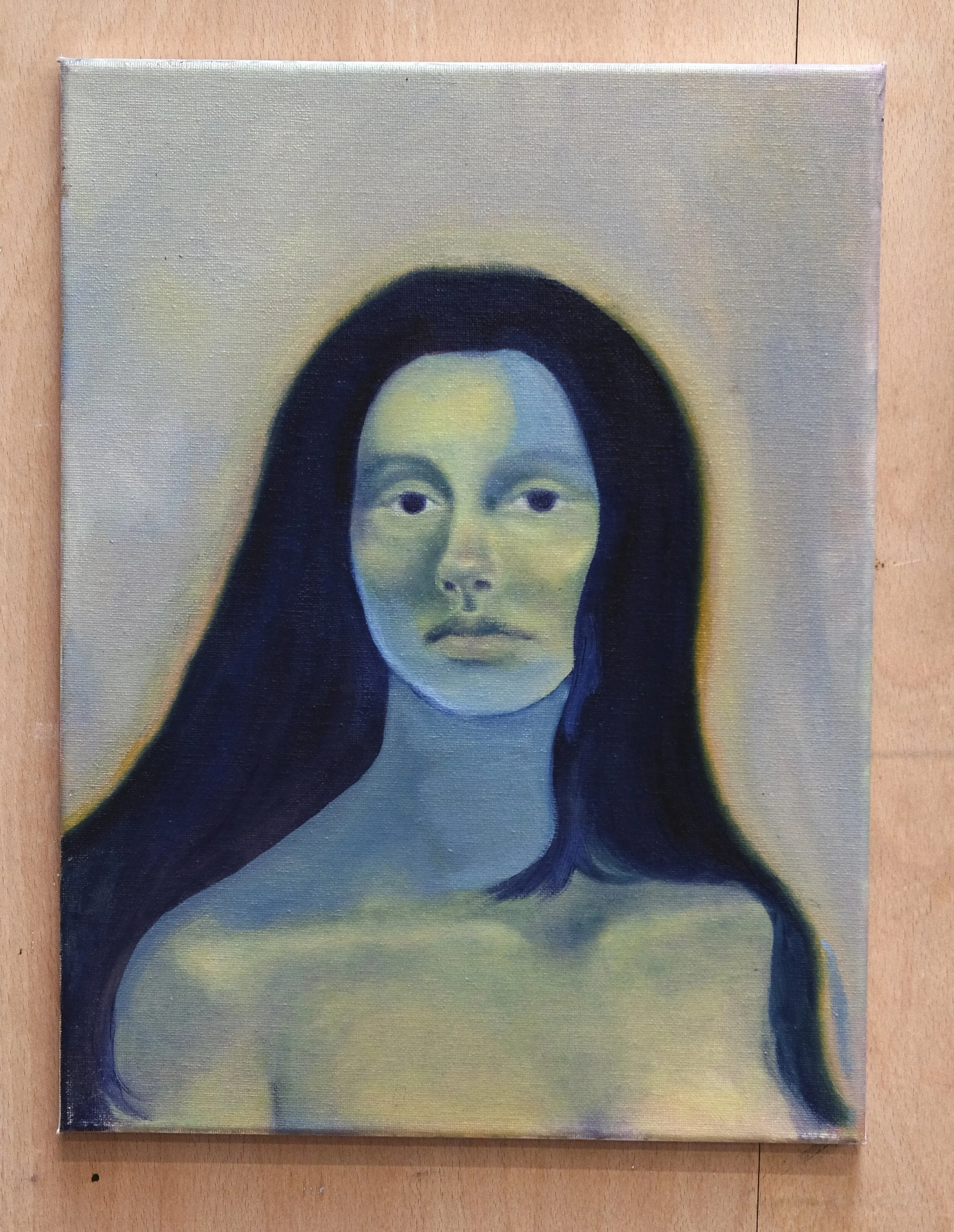
Sanjana Reddy, My Year of Translucence, oil on canvas. Photography by Dana Houshiar.
3. Environment
Heartbroken figures sit uneasily within their environment. In Titilayo Samuel Olufemi’s photograph Still Here, a woman lies unmoving and unmoved amidst a fast flowing stream. A sound piece by Sasha Dixon records the bucolic sound of cowbells and natural landscapes after being unceremoniously dumped by her fiancé half-way up a mountain in Switzerland, juxtaposed against the relentless ticking of a metronome. Other works such as Jill Mueller's Heartbreak Series of aquatints show women being gradually absorbed into the environment, with the second scene depicting a woman being consumed by the sensitive mimosa pudica plant, whilst the third has her fully subsumed into a mountain, isolated from the outside world.
More than one piece probes the difficulty of going outside and putting on a “face” after great loss, literally so in Pamela Wyles’ video pieces, which explore these feelings of vulnerability and exposure through the literal wearing of masks, costume jewellery, and thickly layered make-up before seeing an ex. In Lucy Foo’s scene Closed, the defiant and angry body is closed off from its surroundings, emphatically rejecting and almost entirely obscuring the beautiful landscape around it.
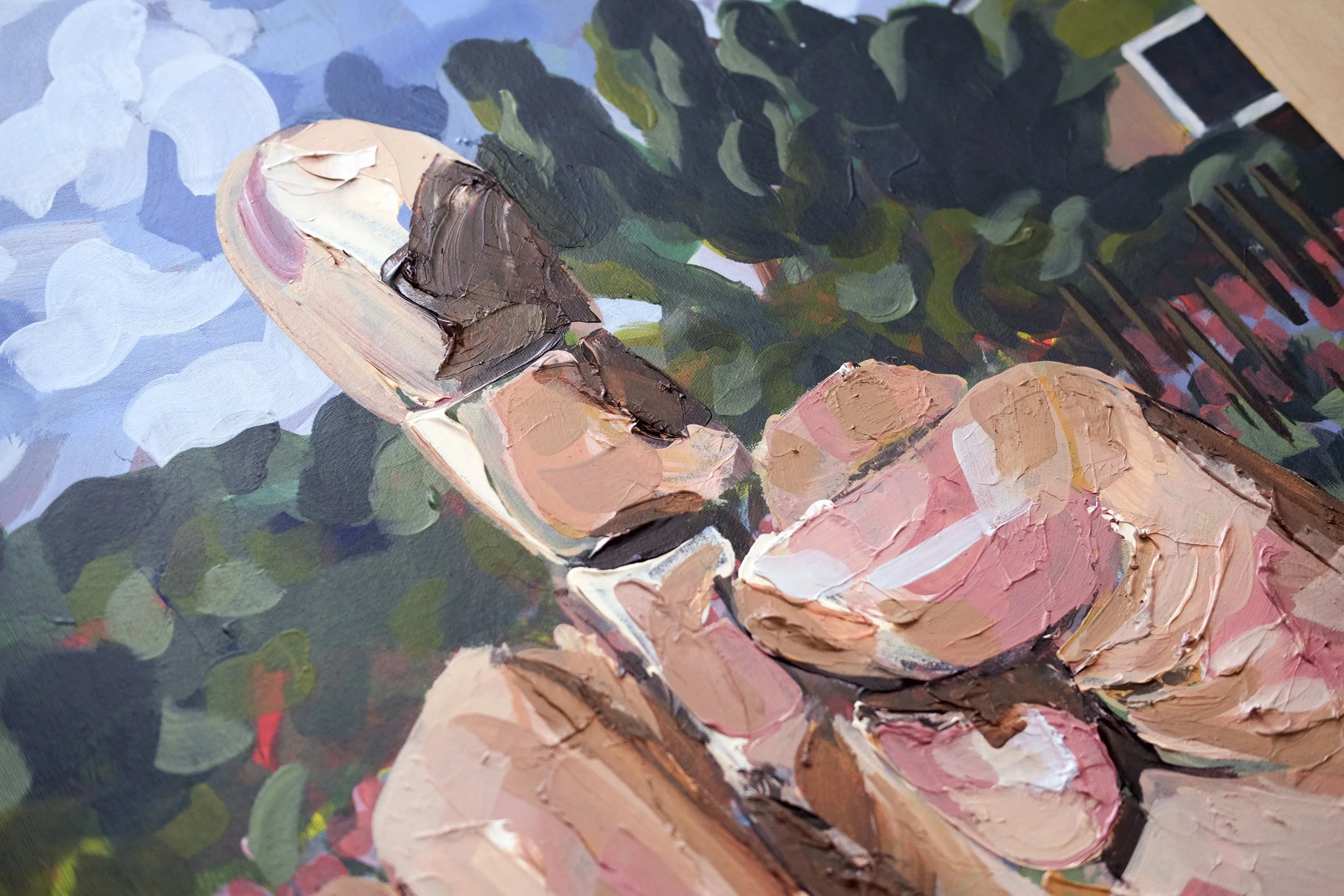
Detail from Lucy Foo, Closed, acrylic on canvas. Photography by Dana Houshiar.
4. Community & Technology
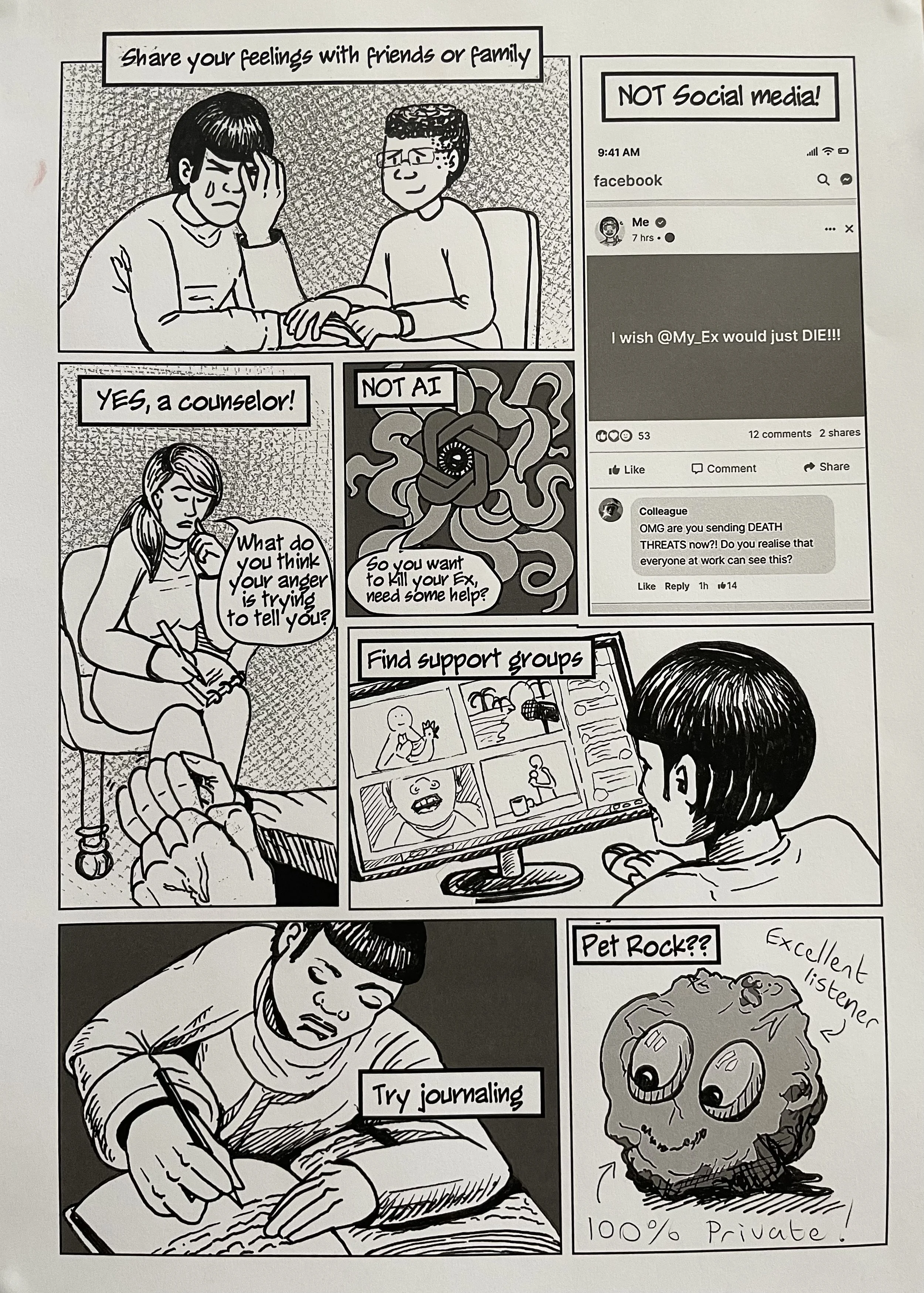
Amy Letts, After Love mini-comic
Several of the works invite viewers to reflect on how experiences of (losing) love have been transformed by the infiltration of tech into our emotional lives. “Share your feelings with friends or family, NOT AI”, advocates Amy Letts' comic. Ana Sekulic's Up in Lights does the exact opposite, using LED screens to illuminate a conversation between "Dan" and ChatGPT. "Everyone says I should move on, but I can't. I keep thinking about what went wrong", says Dan. "Mate, I know it hurts", the algorithm responds. As Sherry Turkle has argued in her recent study Artificial Intimacy (2026), chatbots can provide a balm for emotional pain as they are always there, always ready. Yet in disposing with the friction and negotiation of human relationships, what do we lose of our humanity in the process?
5. Humour & Self-Love
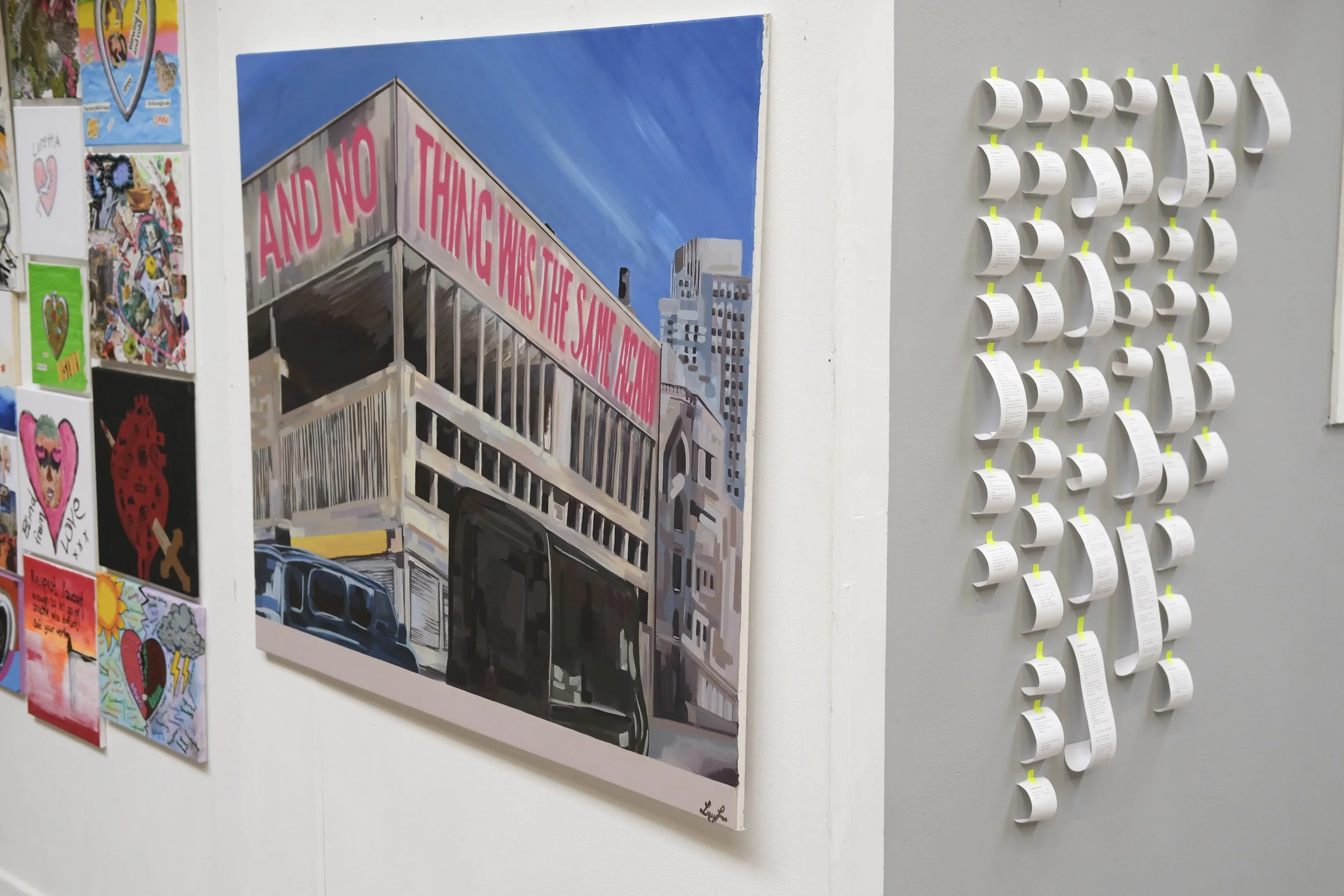
Lucy Foo And No Thing Was the Same Again (L) and Audrey Baldwin’s Bitch Keeps Receipts (R). Photography by Dana Houshiar.
Visitors to the show can regularly be found clustered around Audrey Baldwin's Bitch Keeps Receipts, in which a romantic relationship slowly unravels via text messages printed as literal receipts, recalling works such as Sophie Calle’s Take Care of Yourself, in which a breakup message is reimagined in a multiplicity of forms. "Your so fucken sexy Love u", reads the receipt on 4 May. "Hey um I'm trying to be in a relationship with someone and I'd appreciate it if you don't send me nudes", comes the next receipt five days later, with perfect comic timing.
One thing I have repeatedly been asked is what the exhibition holds for people not currently feeling heartbroken - is there anything more positive to take away? In works such as Breathe Again by Patricia Sheldon-Hicks, the chest inside a denim jacket has been slashed open, inviting visitors to consider whether an ending can become a beginning? So it is in Rachel Brook's poem "Self Love", in which the speaker has emerged from heartbreak at a place of greater acceptance and self-understanding.
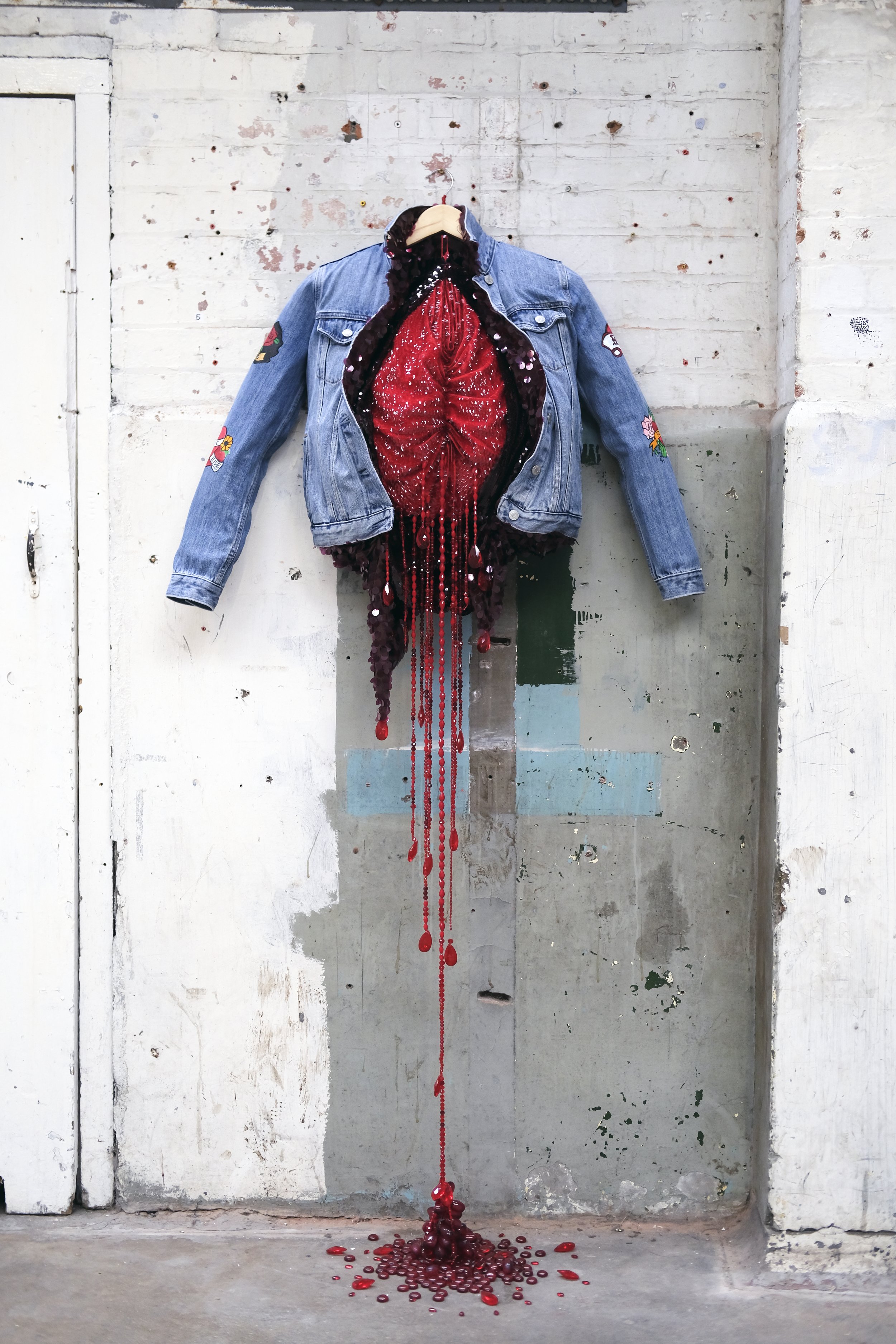
Patricia Sheldon-Hicks, Breathe Again, mixed textiles, beads, sequins and acrylic. Photography by Dana Houshiar.
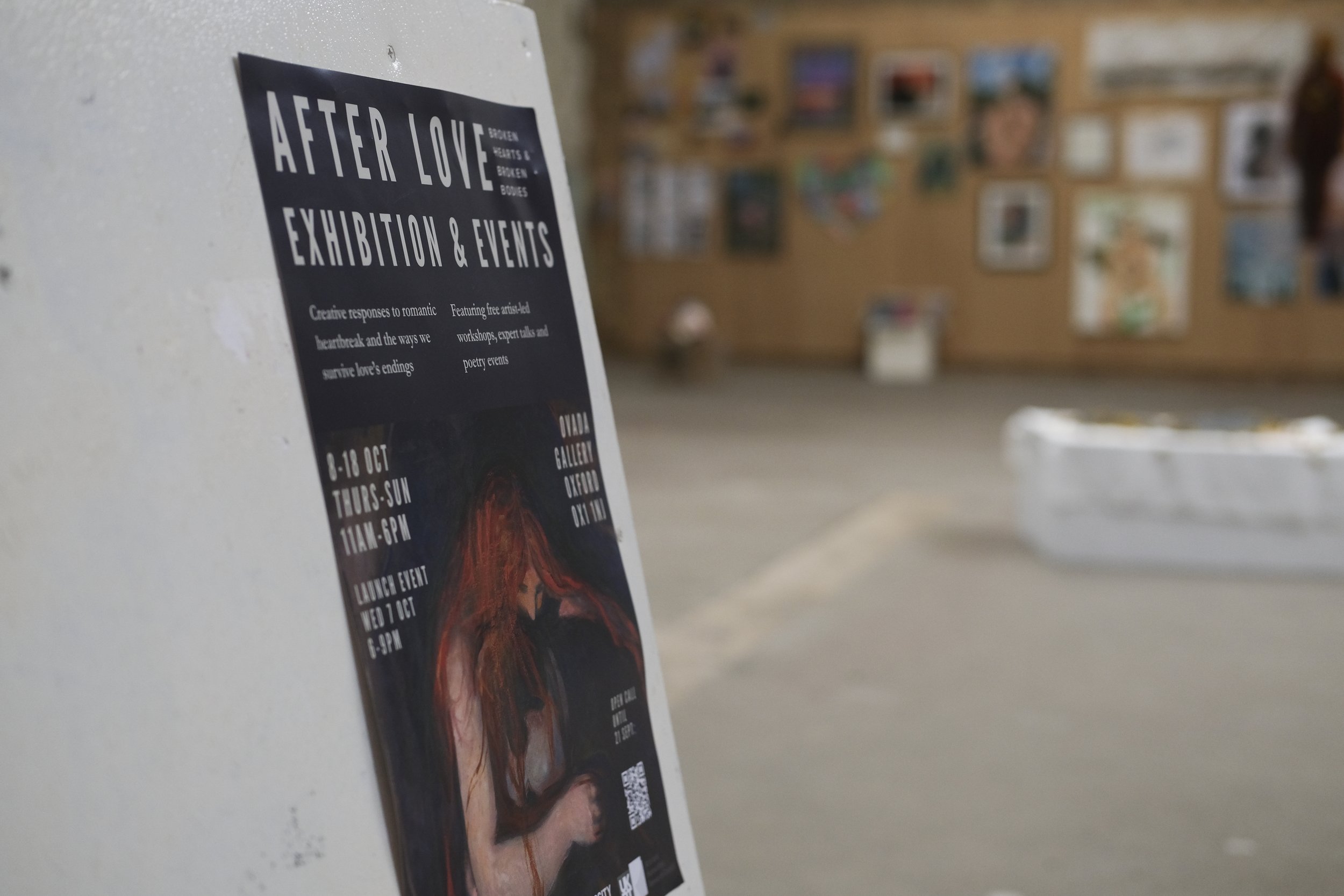
After Love runs at OVADA Gallery until 18th October.
Find the events programme and full details here: https://www.ovada.org.uk/afterloveexhibition
Photography by Dana Houshiar: https://danahoushiar.com
[1] Winifred F. Courtney, Young Charles Lamb, 1775–1802 (London and Basingstoke, 1984), p. 243.